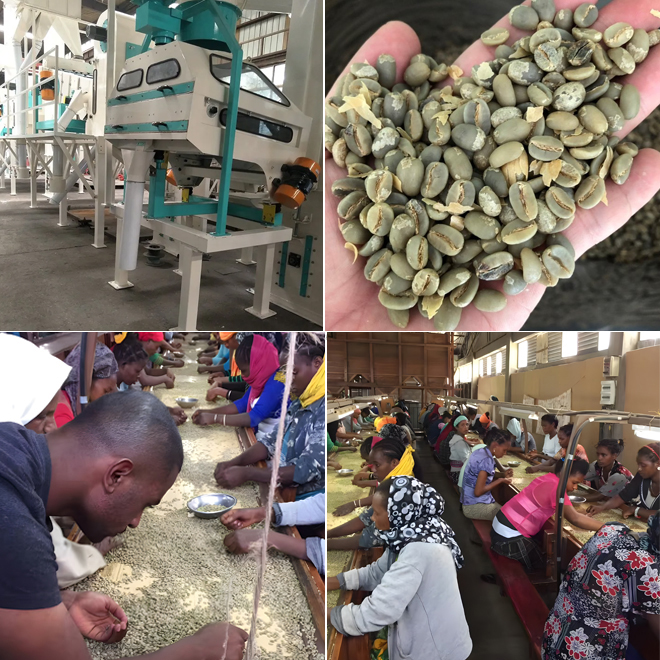
Transforming Dried Parchment into Premium Export-Quality Beans
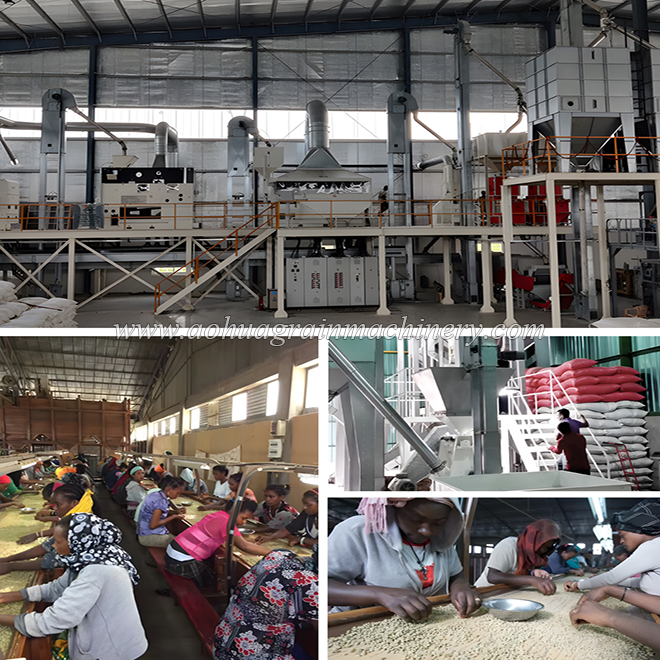
In specialty coffee production, the post-milling phase represents the critical final chapter where potential becomes profit. While excellent cultivation and careful drying establish coffee’s baseline quality, it’s the precision cleaning, sorting, and grading processes that determine whether beans will command premium prices or settle for commodity markets.
Stage 1: Parchment Removal with Precision Control
Advanced Hulling Technology
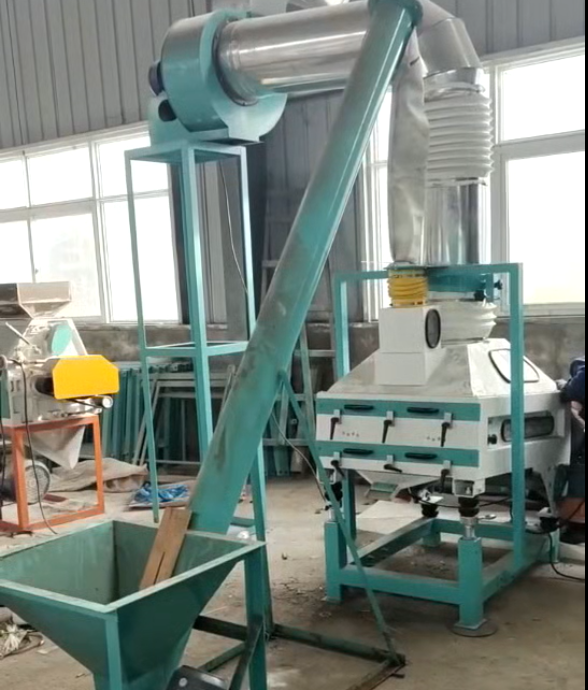
Modern hulling has evolved into a delicate balance of force and finesse.
Stage 2: Density-Based Separation Physics
Gravity Concentration Technology
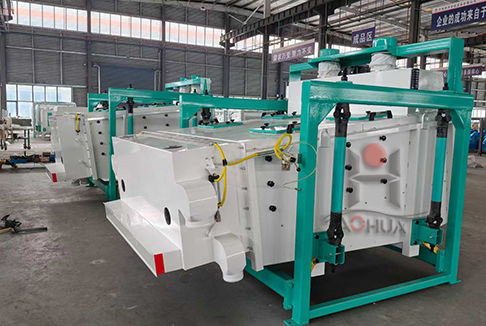
Density sorting operates on fundamental principles of fluid dynamics and vibration mechanics, creating multiple quality tiers from a single batch.
Stage 3: Optical Spectrum Analysis in Defect Detection
Multi-Dimensional Sorting Technology
Contemporary optical sorters employ sophisticated spectral analysis beyond simple color differentiation.
Stage 4: Granulometric Precision in Size Classification
Precision Sizing Technology
Size consistency directly influences roasting dynamics and market valuation.
Stage 5: Final Polishing and Surface Optimization
Controlled Abrasion Technology
Modern polishing balances visual appeal with quality preservation.
Stage 6: Advanced Detection and Final Verification
Multi-Sensor Integration
Final quality assurance employs overlapping detection methodologies.
In today’s specialty coffee market, consistent quality isn’t an aspiration—it’s a requirement. The precision science behind perfect green coffee transforms post-milling from a necessary step into a strategic advantage. By implementing systematic, technology-driven approaches to cleaning, sorting, and grading, producers can consistently deliver the flawless beans that command premium prices and build lasting buyer relationships.